
DATE
LOCATION
BMCC Tribeca Performing Arts Center, NY
REVIEW BY
Shruti Sharma
PHOTO CREDIT
Sarabjeet Matharu and Steven Pisano
barkha patel’s solo, which premiered on the first day of the beginning of shraadh, seeks to embody concepts of ancestral memory, generational desires and trauma and the duality of the feminine divine. Shraadh signifies a weeks-long period in the Hindu calendar devoted to the remembrance of ancestors. In the artist’s words, icchā is a “somatic shraadh, a solo reverence for a collective grief.”
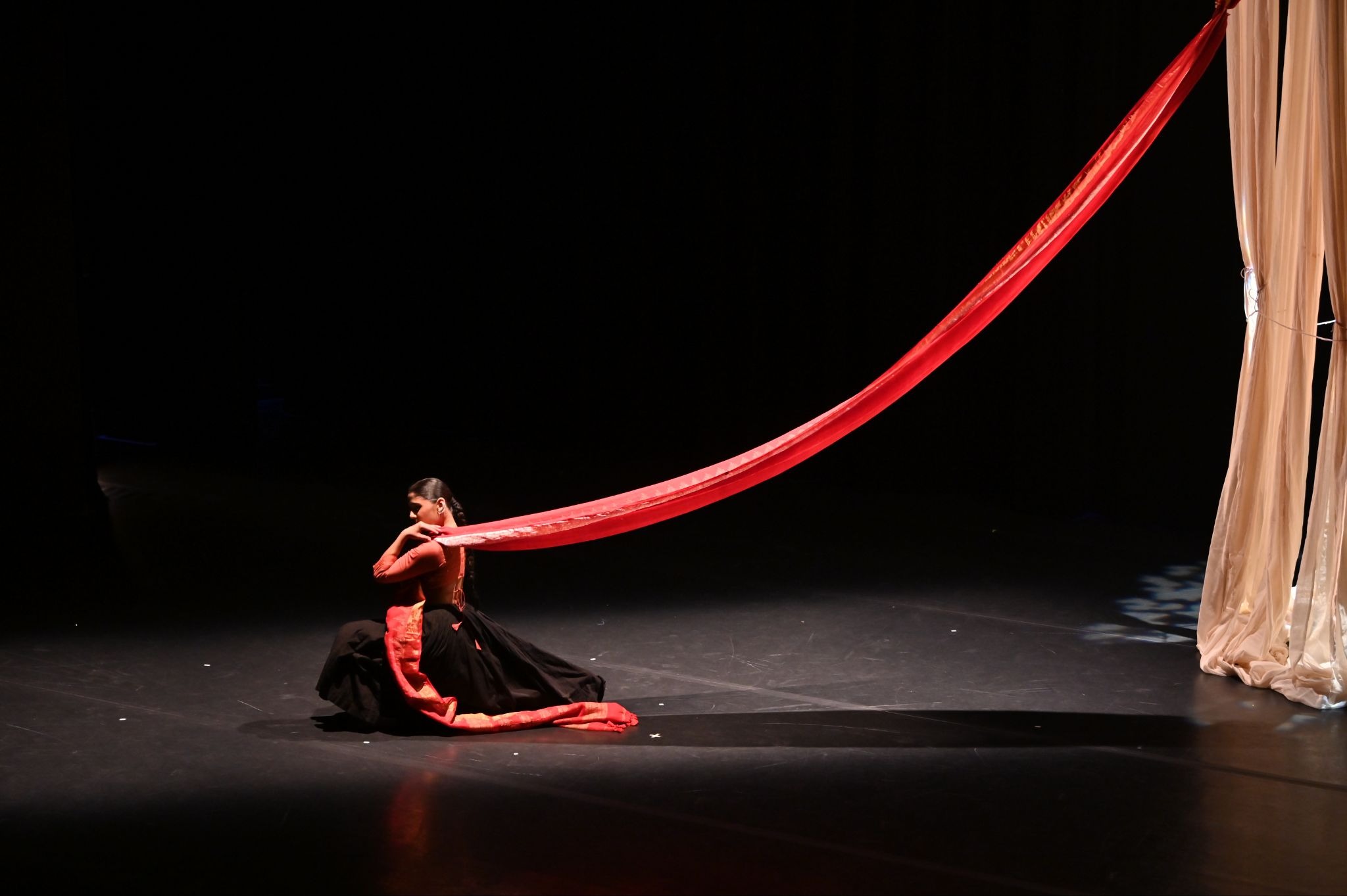
A tall white-curtained structure and moody shadows set the mise-en-scene for an hour-long performance which borrows from the artist’s roots in Kathak and Gujarati garba. The set design serves as an ancestral guiding force of sorts; from which one takes and to which one returns. barkha’s choreographic choices of communal folk and contemporary Kathak intertwine familial heritage with artistic virtuosity. While I personally wished for a deeper grounding in classical Kathak, the two styles mesh together fluidly for the most part. Two moments were especially striking: one with barkha stepping out from the white canopy, drawing a sweeping red trail behind her that evoked an umbilical cord. In the second, she skillfully weaved garba chakkars through a set of 24 brass kalsis (vessels) arranged in neat circles. Each move consistently referred back to the core theme of honoring matrilineal heritage.

The reverberating vocals of Kathak’s ta ki ta dhi ki ta echoed powerfully, serving as the perfect foil to barkha’s energetic spins across the stage. In direct contrast, the audience was presented with an intimate real-life conversation between maternal grandmothers- a dialogue on desires, some yet unfulfilled.
The sequence left me with a deep realization that the physical body is ultimately a vessel for transgenerational inheritance.
The use of Tu Kali ne Kalyani, a popular Gujarati devotional song was particularly effective in invoking the duality of the feminine divine, both as a benevolent bestower of blessings and a fierce conqueror. However, I found the dramaturgy in this moment to be a notch under-developed, given the potential for a powerful showing of contrasting emotions combined with commanding footwork. Perhaps, the addition of a short kavit (poem) depicting the many manifestations of kali set on taal to kathak bols would be a compelling accompaniment to the binary of kali and kalyani.

Towards the final moments of the show, barkha showcased a seated sequence with her back to the audience. With remarkable physical control, she evoked a wide spectrum of feelings, moving from sincerity to frustration and rage, returning to serenity and joy in dance. I particularly enjoyed the hand gestures in this section, a staple of classical Kathak rendered with the clean, fluid lines that have come to define barkha’s artistry throughout the years I have followed her performances.
An anthropological study, researched and performed through a feminist lens, icchā is a blend of varied choreographic styles and sensibilities.
Navigating abstract themes within the structured confines of Indian classical work presents a challenge, yet the performance largely succeeds in achieving this.
Shruti Sharma is a Kathak dancer based in NYC who has performed at New York Kathak Festival, Gracie Mansion, Navatman’s Dashavatar, and other venues. She also writes and composes lyrical pieces for performances, using writing as a way to deepen her connection with the art form.

Leave a Reply